World Stroke Prevention Day - "Acknowledge! Act! Time is of the essence!"
This page has been automatically translated!
avc

Every year on October 29, World Stroke Prevention Day is marked to remind the public about the importance of recognizing the signs of a stroke and acting quickly.

A stroke occurs when the blood supply to part of the brain is interrupted due to a blood thrombus/clot (ischemic stroke), or damage to a blood vessel, leading to hemorrhage (stroke hemorrhagic).

The main risk factors for stroke are: high blood pressure, tobacco and alcohol consumption, physical inactivity, unhealthy diet, atrial fibrillation, elevated blood lipid levels, obesity, genetic predisposition, stress.

Stroke is the leading cause of disability in adults (25-65 years) and the second cause of dementia and depression in the elderly. During a stroke, 1.9 million brain cells die every minute, and more than 94 million people worldwide live with post-stroke consequences, long-term or for the rest of their lives. In the Republic of Moldova, over 12,000 people suffer a stroke annually.

In the last two years (2023-2025), our country has moved from creating a network of centers for stroke treatment to strengthening integrated intervention and rehabilitation services, marking a constant increase in the number of life-saving procedures, a reduction in disabilities and an expansion of access to care through telemedicine and modern equipment.

Currently, it works 12 of the 13 specialized centers – 10 primary centers, one comprehensive center (Institute of Emergency Medicine) and one multidisciplinary center (Institute of Neurology and Neurosurgery). All have been equipped with modern equipment and trained personnel, with the support of Switzerland and the WHO.

The data presented confirm a constant evolution of the intervention capacity and the quality of medical care:
• the number of intravenous thrombolysis (treatment that dissolves the clot) has increased by more than 60% compared to 2023;

• the number of thrombextractions (mechanical removal of the clot) doubled;

• through telemedicine, the centers performed more than 1,300 consultations in just 9 months, facilitating rapid diagnosis and treatment coordination;

• post-stroke neurological deficit reduced considerably – from an average National Institutes of Health Stroke Scale (NIHSS) score of 6 points in 2022 to 4 points in 2024, indicating a significant decrease in the degree of stroke disability;

• addressability of patients in the "therapeutic window" - the critical period when treatment can save life and reduce sequelae - increased by almost 38% (from 166 cases in 2024 to 229 in 2025).

These results confirm the full functionality of the national stroke network and the real impact of the information campaign "Recognize! Act! Time counts!", which contributes to increasing the level of awareness and to the faster presentation of patients to the hospital.

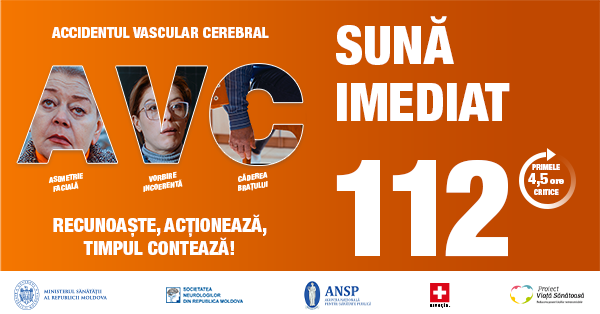
The main signs of a stroke can be:

– asymmetry of the face (the mouth or the eye falls to one side);

– sudden weakness in an arm or a leg;

– difficulties in speaking or understanding speech.

Recognizing these signs and calling the Service immediately emergency 112 can save lives.

Admit it! Act! Time counts!

Most cases of stroke can be prevented by adopting a healthy lifestyle. For more information and materials of the campaign, go to The ACKNOWLEDGMENT Campaign! TAKE ACTION! TIME MATTER!
administrator
Last update: 29 Oct 2025 - 13:51

ANSP informs about the epidemiological situation through respiratory infections

This page has been automatically translated!
Gripa

The National Agency for Public Health continues the surveillance of respiratory infections and the monitoring of the circulation of influenza viruses and SARS-CoV-2 at territorial and national level. In the period 20.10.2025-26.10.2025 (week 43/2025), 1506 cases of IACRS were registered, most of them in children, decreasing by 0.1% compared to the previous week.

During the mentioned period, 5 cases of seasonal flu were registered in the municipality of Chisinau.

At the same time, they 14 cases of COVID-19, down 56% compared to its previous week. Among children, 4 cases were reported.

Since the beginning of the monitoring period (29.09.2025 – 26.10.2025), 11 cases of influenza, 6485 cases of IACRS and 156 cases of COVID-19 have been registered.

ANSP urges the population to be vaccinated simultaneously against seasonal flu and the infection caused by the virus SARS-CoV-2. Seroprotection is generally achieved 2 to 3 weeks after vaccination. The duration of post-vaccination immunity varies between 6 and 12 months.

ANSP reiterates that the benefits of vaccination are significant. In addition to vaccination, it is essential that the population adopt personal hygiene measures such as washing hands with soap and water, using tissues when sneezing or coughing, and maintaining a healthy lifestyle that includes a diet rich in vegetables and fruits, adequate rest, and regular exercise. These measures, combined with vaccination, offer the best protection against influenza and other respiratory infections.

administrator
Last update: 28 Oct 2025 - 16:08

Intersectoral workshop on public health emergency preparedness and response

This page has been automatically translated!
bio

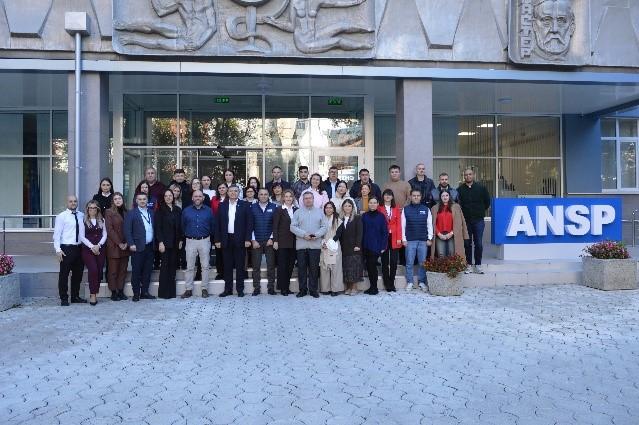
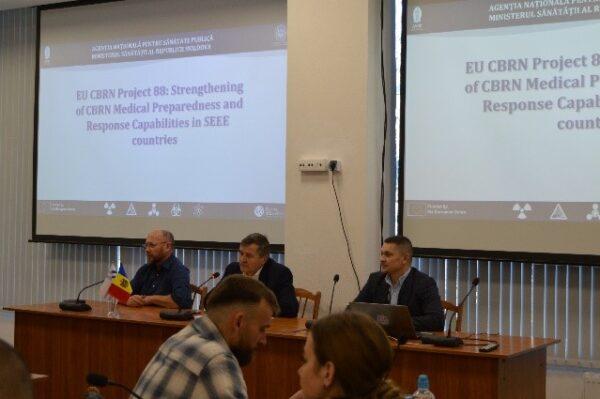
On October 21–23, 2025, the training workshop on preparing and responding to threats of biological etiology was held. The event was organized with the support of the Scientific and Technological Center of Ukraine, within Project P88: "Consolidation of medical training in emergencies of chemical, biological, radiological and nuclear (CBRN) etiology and response capacities in the countries of South-Eastern and Eastern Europe".

At the workshop there are specialists from the ANSP, The General Inspectorate for Emergency Situations, the National Center for Prehospital Emergency Medical Assistance, the National Center for Animal, Plant and Food Health, the Institute of Emergency Medicine and the "Nicolae Testemițanu" State University of Medicine and Pharmacy.

The training combined both theoretical sessions on CBRN risks, as well as applied exercises and simulations. The participants also took part in a practical (table top) exercise based on a biological incident scenario produced in the Chisinau International Airport. The scenario aimed at testing the response mechanisms to a possible exposure to Bacillus anthracis (anthrax) and the coordination of inter-institutional actions in the medical, epidemiological and laboratory fields.

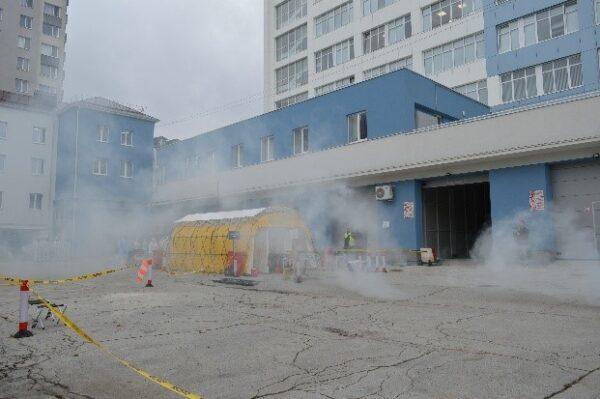
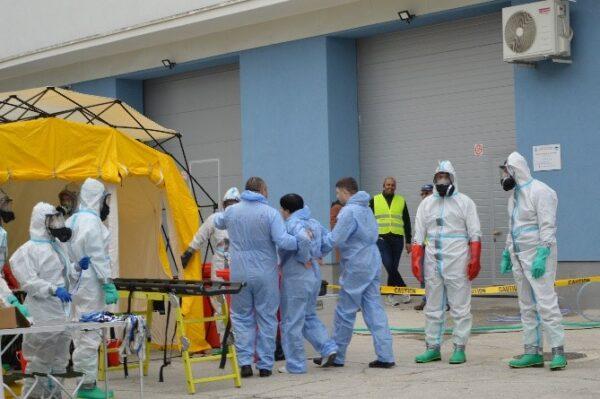
The workshop ended with a practical field exercise, which simulated an attack with biological substances during a public event. The intervention teams of ANSP, Regional CSP, CNAMUP and IGSU practiced the procedures of medical triage, decontamination, sampling, patient transport and the application of public health measures.

The National Agency for Public Health thanks the partners of the P88 Project, especially the European Union, the European Union Center of Excellence for CBRN Risks, as well as the Center Scientific and Technological from Ukraine, for the constant support given to the Republic of Moldova in developing the resilience and response capabilities of the medical system.

administrator
Last update: 28 Oct 2025 - 16:05

Surveillance of respiratory infections and monitoring of the circulation of influenza viruses and SARS-CoV-2 at national level, during the period 13.10-19.10.2025 (week 42/2025)

This page has been automatically translated!
Gripa

The National Agency for Public Health continues the surveillance of respiratory infections and the monitoring of the circulation of influenza viruses and SARS-CoV-2 at territorial and national level. In the period 13.10.2025-19.10.2025 (week 42/2025), 1507 cases of IACRS were registered, most of them in children, decreasing by 12.6% compared to the previous week.

During the nominated period, a case of seasonal flu was registered in Anenii Noi.

At the same time, there were registered 32 cases of COVID-19, down 35% compared to its previous week. Among children aged 0-14 years, 14 cases were reported.

For the specific prophylaxis of seasonal flu for the professional contingent and people at increased risk of illness in the 2025/2026 flu season, the Republic of Moldova purchased in September 2025 a batch of 240 thousand doses of Influvac Tetra flu vaccine, with a dose of 0.5 ml in a syringe prefilled. The composition of the vaccine fully complies with the recommendations of the World Health Organization.

ANSP urges the population to simultaneously vaccinate against the seasonal flu and the infection caused by the SARS-CoV-2 virus. Seroprotection is generally achieved 2 to 3 weeks after vaccination. The duration of post-vaccination immunity varies between 6 and 12 months.

ANSP reiterates that the benefits of vaccination are significant. But in addition to vaccination, it is essential that the population adopt personal hygiene measures such as washing hands with soap and water, using tissues when sneezing or coughing, and maintaining a healthy lifestyle that includes a diet rich in vegetables and fruits, adequate rest, and regular exercise. These measures, combined with vaccination, offer the best protection against influenza and other respiratory infections.

administrator
Last update: 21 Oct 2025 - 17:06

International expertise for biosafety and biosecurity, brought to USMF "Nicolae Testemițanu" in partnership with the National Agency for Public Health and the Agency for Biosafety and Biosecurity of the Republic of Moldova

This page has been automatically translated!
ANSP

In the context of the anniversary of 80 years of prodigious activity, the State University of Medicine and Pharmacy "Nicolae Testemițanu" on October 20, 2025 organized today a series of high-level scientific and practical events. Among them, the workshop "Biosafety and biosecurity in the context of the dual use of biological agents - responsibility and prevention in laboratory activity" was held, organized by the Discipline of Microbiology and Immunology, in collaboration with the National Agency for Public Health (ANSP) and the Agency for Biosafety and Biosecurity of the Republic of Moldova (ABBRM).

The event of was moderated by Mrs. Greta Balan, head of the discipline, and Mrs. Olga Burduniuc, deputy director of ANSP and president of ABBRM.

The workshop brought together international experts from the Support Unit for the Implementation of the Geneva Convention on Biological Weapons: Dr. Herman Alex Lampalzer, Dr. Clarissa Rios Rojas and Mr. Dionysis Vourtsis, president of the Hellenic Biosafety Society and consultant in biorisk management. They addressed current topics regarding the global biosecurity framework, the dual use of biological agents, biosafety and biosecurity risk assessment, as well as preventive measures in laboratory activity.

The discussions emphasized the importance of professional responsibility and international cooperation in the context of the modernization of scientific methods, advanced diagnostics and emergency pathogens.

The event was attended by microbiology specialists - doctors, residents and teaching staff - interested in promoting an institutional culture based on safety, ethics and innovation.

administrator
Last update: 21 Oct 2025 - 17:03